TECHFUND
Media

The Complete Beginner’s Guide to Perpetual Swaps and Trading
“Quick question: If you think Bitcoin’s price will fall, would you (a) buy Bitcoin, (b) sell Bitcoin, or (c) open a short position? By the end of this blog, you’ll know the correct answer.”
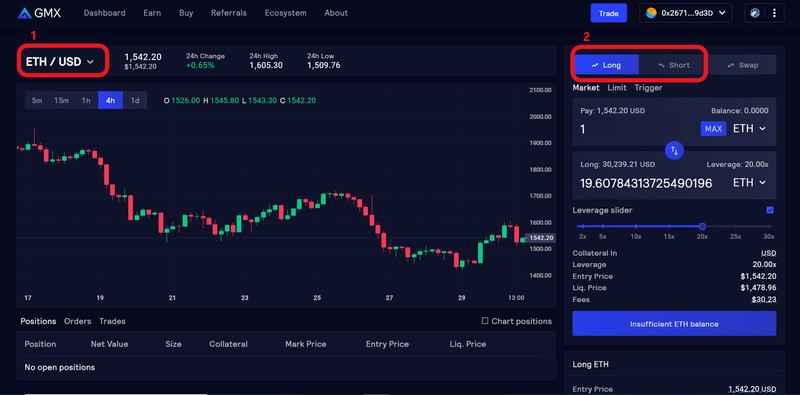
“What exactly are perpetuals? Let’s break it down in simple terms.”
It is a type of derivative contract that allows traders to speculate on the price of an asset without ever needing to settle the contract. Perpetuals have no expiration date . Traders can hold position as long they meet margin requirements.
Perpetual Swaps :
The product you actually trade on most crypto exchanges is called a perpetual swap.A perpetual swap allows traders to bet on the direction of a cryptocurrency’s price without ever owning the underlying asset.
If the price moves in the same direction as your bet, you make a profit.
If it moves in the opposite direction, you take a loss.
Example:
Alice thinks ETH is going to climb, so she open long position on a perpetual swap.
If ETH jumps from $2,000 to $2,100, she makes a profit since the price moved her way.
But if ETH drops to $1,900, she takes a loss because the price went against her.
How Do Perpetuals Work? Breaking Down the Core Mechanics
“The core mechanics of perpetuals and trading revolve around five key steps. Let’s walk through the procedure of how perpetuals work.”
Margin & Collateral :
“Margin is the initial amount you deposit to open a trade. To keep your position active, you must maintain a minimum margin, known as the maintenance margin. If your account balance drops below this level, your position becomes liquidatable, and the protocol can close it.”
“Collateral is the total deposit amount in your account. It’s the amount available for opening trades.”
Example:
Alice deposits $1,000 into her trading account — this is her collateral.
She decides to open a trade that requires $200 as margin. As long as her account balance stays above the maintenance margin, her trade stays open.
But if the market moves against her and her balance falls too low, the protocol can step in and close her position to prevent bigger losses.
2. Leverage :
“Leverage means opening a trade or position that is a multiple (x times) of the USD value of your collateral.”
To calculate position size when using leverage, you multiply your collateral by the chosen leverage.
Example:
Alice wants to open a position with 6x leverage and deposits 1,000 USDC as collateral.
Her position size will be:
6×1000 USDC=6000 USDC
So, with only $1,000 deposited, Alice controls a $6,000 position.
Leverage amplifies both sides of your trade:
If the price moves in your favor, profits are multiplied.
If the price moves against you, losses are also multiplied.
3. Long & Short Positions (Profit & Loss)
“A long position is when a trader bets that the price of a token will increase over time.”
If the price goes up, the position makes a profit.
If the price goes down, the position makes a loss.
Profit and Loss Calculation for Long Trades :
“Let’s assume a scenario where a trader opens a long position on the price of ETH.”
a). Long ETH and the price goes up:
“Alice opens a position with 5x leverage on ETH. She deposits 1,000 USDC as collateral. At the time she opens the trade, the price of ETH is 2,000 USDC. After some time, the price of ETH rises to 3,000 USDC.
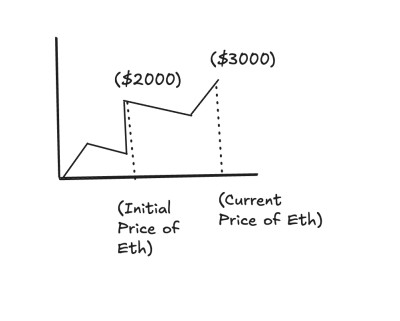
Since Alice opened a long position, this move gives her a profit. Let’s calculate her profit, guys!
With 5x leverage, the position size is $1,000 × 5 = $5,000.
Position size in ETH = $5,000 ÷ $2,000 = 2.5 ETH.
Alice’s profit = (2.5 × $3,000) — (2.5 × $2,000) = + $2,500 ”
b). Long ETH and the price goes down:
“Alice opens a position with 5x leverage on ETH. She deposits 1,000 USDC as collateral. At the time she opens the trade, the price of ETH is 2,000 USDC. After some time, the price of ETH drops to 1000 USDC.
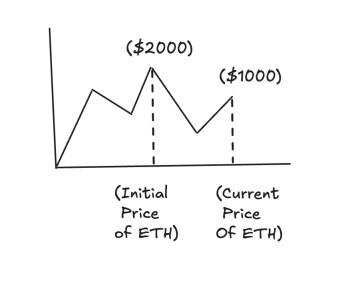
Since Alice opened a long position, this move gives her a loss. Let’s calculate her loss, guys!
With 5x leverage, the position size is $1,000 × 5 = $5,000.
Position size in ETH = $5,000 ÷ $2,000 = 2.5 ETH.
Alice’s loss= (2.5 × $1,000) — (2.5 × $2,000) = -$2,500 .”
Let’s talk about short positions now.
“A short position is when a trader bets that the price of a token will decrease over time.”
If the price goes down, the position makes a profit.
If the price goes up, the position makes a loss.
Profit and Loss Calculation for Short Trades :
“Let’s assume a scenario where a trader opens a short position on the price of ETH.”
a). Short ETH and the price goes up:
“Alice opens a position with 5x leverage on ETH. She deposits 1,000 USDC as collateral. At the time she opens the trade, the price of ETH is 2,000 USDC. After some time, the price of ETH rises to 3,000 USDC.
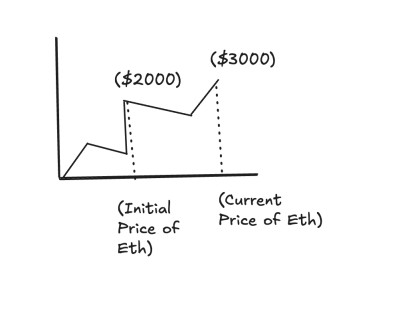
Since Alice opened a short position, this move gives her a loss. Let’s calculate her loss, guys!
With 5x leverage, the position size is $1,000 × 5 = $5,000.
Position size in ETH = $5,000 ÷ $2,000 = 2.5 ETH.
Alice’s loss = (2.5 × $2,000) — (2.5 × $3,000) = — $2,500 ”
b). Short ETH and the price goes down:
“Alice opens a position with 5x leverage on ETH. She deposits 1,000 USDC as collateral. At the time she opens the trade, the price of ETH is 2,000 USDC. After some time, the price of ETH drops to 1000 USDC.
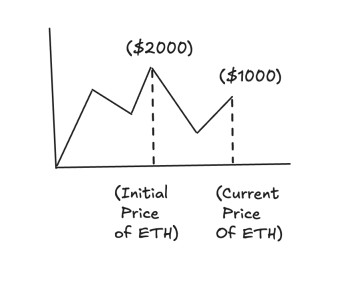
Since Alice opened a short position, this move gives her a profit . Let’s calculate her profit, guys!
With 5x leverage, the position size is $1,000 × 5 = $5,000.
Position size in ETH = $5,000 ÷ $2,000 = 2.5 ETH.
Alice’s profit = (2.5 × $2,000) — (2.5 × $1,000)= $2,500 .”
4. Funding Rate
Funding rates are periodic payments made between traders who are short and long in a perpetual market. The funding rate can be either positive or negative depending on the difference between the initial price and current price.
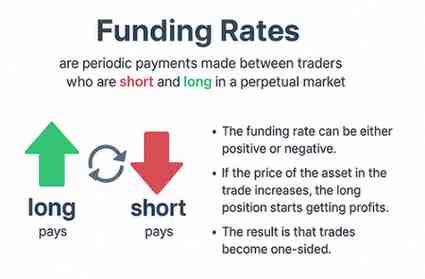
If the price of the asset in the trade increases, the long position starts getting profits, so there may be chances that it will attract users to open more long positions. The result is that trades become one-sided, so if the price of the asset increases, long positions will pay short positions. Otherwise, if the price of the asset starts decreasing, the short position traders will pay the long position traders.
5. Liquidation
Liquidation happens when the position does not have enough collateral or margin to keep it open. There may be a situation where a user opens a short position with 5x leverage and deposits 1,000 USDC as collateral because they believe the price of the asset will decrease. But if the market reverses and the price of the asset increases, the position will incur continuous losses. Now, the user does not have enough collateral to keep the position open, and it starts generating losses. At this point, the protocol has the right to seize the collateral, close the position, and cover the losses generated by it.
Hoping that you learned something from this blog. See you again next time in another awesome blog. Good Luck & WAGMI :)
Author: Mohini Vasisth
Intern, Security Researcher at TECHFUND