TECHFUND
Media

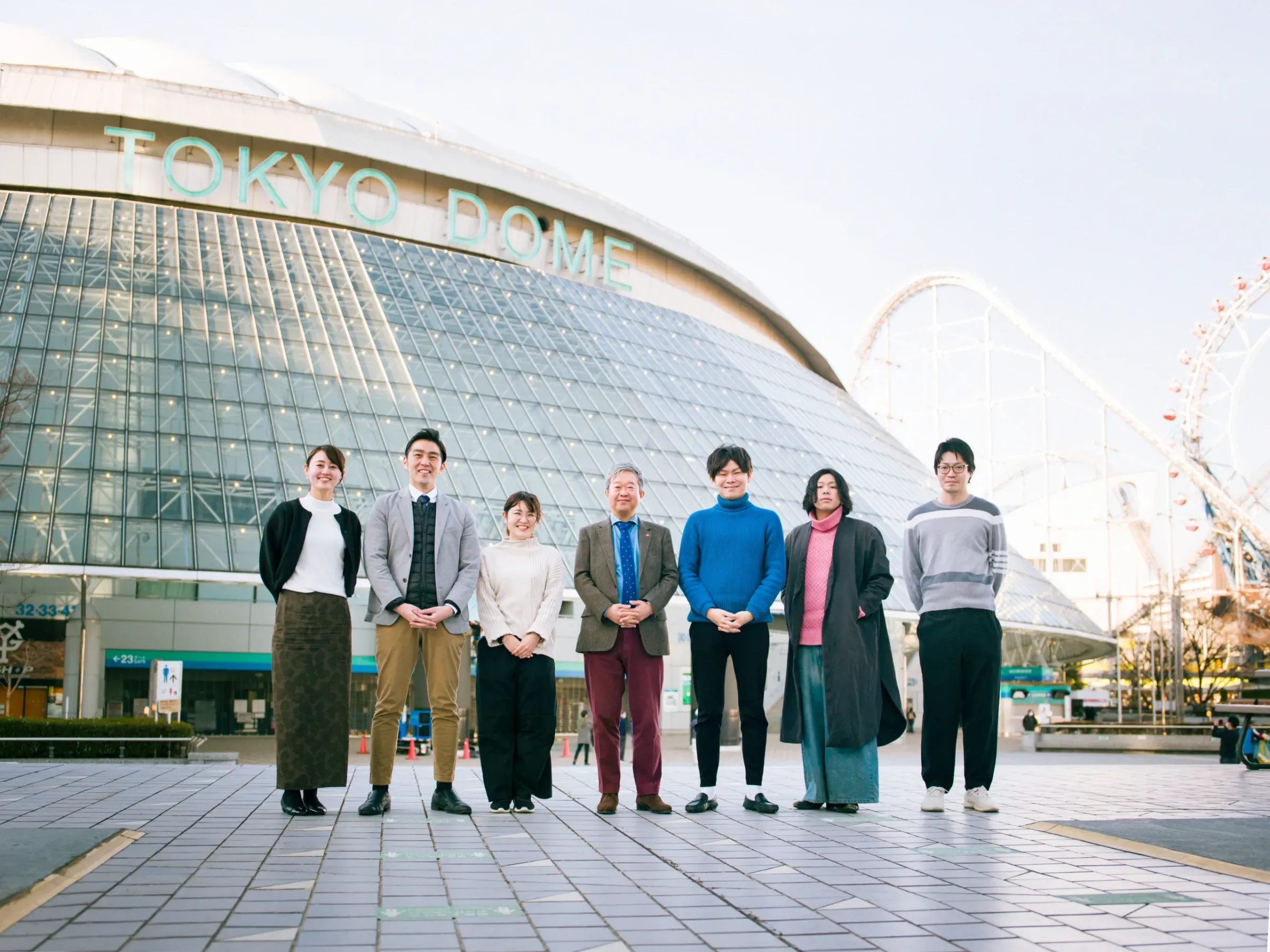
【First Release】How to create new businesses at Tokyo Dome during the COVID-19 era?
Tokyo Dome Corporation, which started with just one baseball stadium in 1936, has been leading Japan's entertainment scene, centered around the Suidobashi area. Since 2016, the company has been focusing on creating new business ventures as part of its business strategy.
In promoting the "In-House Acceleration Program" that recruits entrepreneurs within the company, Tokyo Dome has chosen TECHFUND Inc. as a partner. TECHFUND has a track record of supporting many entrepreneurs through technology provision and has conducted numerous transactions with major corporations that have recognized its technological capabilities.
Starting this fiscal year, Tokyo Dome has introduced the "ACCEL PROGRAM for BIZ," a service that supports individuals creating new businesses with the power of technology, and will gather seeds of ideas that lead to the creation of new ventures.
Indeed, what is the new project related to the creation of new businesses that will play a central role in the recovery from the COVID-19 crisis and the transformation of business models, undertaken by both parties?
Strengthening the creation of new businesses aimed at medium to long-term business transformation
Interviewer (Yamamoto), hereafter referred to as Yamamoto: First, could you tell us what prompted Tokyo Dome to focus on new business development?
Tokyo Dome (Mr. Nomura), hereafter referred to as Nomura: The New Business Development Department at Tokyo Dome was established in 2017, and this is its fourth year in 2021. As everyone knows, various Tokyo Dome City businesses such as amusement facilities, hotels, and event halls are centered around the Suidobashi area in Tokyo.
Before the spread of the novel coronavirus, facilities such as “Tokyo Dome,” “Tokyo Dome City Attractions,” and the entertainment-oriented integrated commercial facility “LaQua” used to attract approx. 40 million visitors annually as urban leisure destinations. But, considering our company’s long-term prospects, we realized that relying solely on the Suidobashi area for operations and expansion might lead to stagnation in future. With a desire to expand our business beyond this local area, we have embarked on new business ventures.
Before the spread of COVID-19, facilities such as "Tokyo Dome," "Tokyo Dome City Attractions," and the entertainment-based commercial complex "LaQua" were visited by approximately 40 million people annually, making them a familiar part of urban leisure. However, looking towards the future potential of our company, there was a consciousness that business operations and development limited only to the Suidobashi area might reach a ceiling. With the desire to expand our business externally, we decided to proceed with the development of new ventures.
Yamamoto: Were there also effects from environmental changes caused by the new coronavirus?
Nomura: Well, we were already advancing new business development before the spread of the novel coronavirus, but it's true that the necessity increased significantly once the pandemic hit. In reality, factors such as restrictions on going out, voluntary restraint on events and business operations, and a decrease in visitors due to limits on event attendance were the main factors for significant losses. Even if the coronavirus were to be brought under control, it would be difficult to return to the previous state. With this in mind, we began to consciously focus on transforming our business model with a view to medium- to long-term goals (= new business development).
What were the challenges of the predecessor in-house acceleration program, 'Dream Project'?
Yamamoto: Before the introduction of TECHFUND's 'ACCEL PROGRAM for BIZ,' was there an acceleration program being promoted within the company?
Tokyo Dome (Hamaguchi), hereafter Hamaguchi: There is an existing internal proposal system called the "Dream Project." The project was launched three years ago (as of the interview in 2021), and at that time, we had set three main pillars for new business development: "①Led by the New Business Development Department," "②Gathered through the Dream Project," and "③Progressing with external companies from an open innovation perspective."
Yamamoto: Were there any concerns or challenges in operating the Dream Project?
Nomura: A major issue with the predecessor Dream Project was that, despite being an internal proposal system, the number of applications was very low. In practice, there were only a few proposals that seemed viable for pilot testing, and it was evident that the system was not functioning effectively in many respects.
As members of the New Business Development Department, we were in a state of conflict, thinking, “We need to fundamentally review this project,” but also “We don’t know what to do.” It was at that time that Hamaguchi suggested TECHFUND’s business support services, saying, “There’s an interesting company.”
TECHFUND: What specifically about our company interested you?
Hamaguchi: When TECHFUND first contacted us, they introduced themselves as a ‘blockchain company,’ but when we actually met for the meeting, they said, ‘Actually, we didn’t set up this meeting to talk about blockchain!’ which made me think, what a unique company this is (laughs). It was from this connection that we consulted with them about the challenges we were facing with the Dream Project and open innovation that I mentioned earlier. Although our consultation was filled with vague concerns, they provided ideas from multiple perspectives and said, “We (TECHFUND) can help with the current challenges Tokyo Dome is facing!” It may have been, in a sense, a fateful encounter.
Tokyo Dome (Akagi), hereafter Akagi: The formulation of the “New Medium-Term Management Plan,” which started in February 2021, was underway at the same time, and one of the major themes of this plan was new business development. It was good fortune that we encountered the right opportunity just as we were trying to establish the most suitable direction for ourselves.
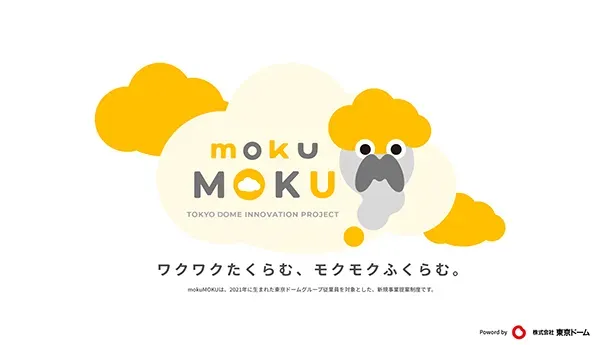
Yamamoto: I believe we are now at the starting point of advancing new business development. Please tell us what you would like employees to be aware of in order to foster an entrepreneurial spirit.
Hamaguchi: What we are currently receiving support for from TECHFUND is the internal proposal system ‘mokuMOKU.’ As I mentioned earlier, the predecessor internal proposal system ‘Dream Project’ was unable to gather a sufficient number of ideas that could become seeds for new businesses. Looking back, we recognize that we were not able to effectively communicate the content and appeal of the project. Going forward with mokuMOKU, we would like to actively conduct not only explanatory meetings but also workshops and seminars.
I am full of anticipation to see how much the challenges we faced in the past will be improved with this new project.
Contact TECHFUND for new business development
Committing to new business creation as part of the ‘core business.’ Measures for proactive new business development
Yamamoto: How will in-house entrepreneurs commit to creating new businesses in the future?
Nomura: We would like employees who have won awards in the company competition to use 20% of their working hours to advance the proof of concept for their ideas. What we emphasized is the perception of the costs and time involved in new business development as part of the company’s operations. Rather than having them work on new business development as an “add-on” to their main job, we decided on this commitment approach because we want them to proceed as part of their regular duties. By having employees use 20% of their time for new business ventures while continuing with their regular duties, we expect to enhance the effectiveness of our new business creation efforts.
Yamamoto: So, you are thoroughly strengthening the efforts towards new business creation that have been made up to now. Do you have any specific thoughts on the kind of employees you would like to participate?
Nomura: Basically, we would like all employees to participate. We want to create a company-wide system that involves everyone, not limited by age, position, or department.
Akagi: Personally, there’s an image that companies active in creating new businesses have many young employees. However, Tokyo Dome has a wide age range of staff, from young employees to older ones with rich personalities. Many have witnessed the history of Tokyo Dome and have their own visions for the future. I believe that by teaming up veteran employees with young employees who have fresh ideas, we can generate interesting proposals that transcend the barriers of age and experience.
TECHFUND: Indeed, it seems that products born from employees of different generations and positions are quite promising.
Akagi: Originally, at Tokyo Dome, there were many opportunities to work together across age and position, often moving projects forward with innovative structures. I feel that this will become a strength as we proceed with new business development in the future. In our company, veteran employees who have experienced the bubble era are currently working at the top of the internal hierarchy. Because we know past successes, we believe we can create ideas that strike at the core of the Reiwa era. As operators, we want to advance team building that makes good use of this knowledge and find the seeds of new businesses that are not confined by conventional frameworks.
Contact TECHFUND for new business development
The strengths of TECHFUND as perceived by Tokyo Dome’s New Business Development Department

Yamamoto: Among the many companies that provide support for new businesses, what was the deciding factor in adopting TECHFUND’s ‘ACCEL PROGRAM for BIZ’?
Hamaguchi: Since we didn’t conduct a specific competition, this is purely a subjective opinion, but the decisive factor was probably that they empathized with the challenges we were facing. They broke down our vague concerns into details and translated them into concrete measures.
Yamamoto: What do you mean by vague concerns?
Hamaguchi: Naturally, the New Business Development Department is the main department responsible for new ventures, but we faced the challenge of not being able to promote it as a company-wide project. In addition, we had several difficult-to-articulate issues, such as ‘the ideas collected from employees not leading to new business development’ and ‘what is the definition of a new business for Tokyo Dome?’ We were truly grateful to have an environment where we could discuss all these detailed concerns and to have someone sincerely address each one of them.
Akagi: I think one of the charms of TECHFUND is that they always explain things based on specific examples. It’s like they have a knack for helping you imagine what’s beyond the current measures. Although we have interest and enthusiasm for the in-house acceleration program, we lack experience and know-how. They stand in our shoes and instead of speaking in abstractions, they say things like, “In this case, it would be XX,” or “If that happens, the best way to proceed would be this way,” always unfolding the discussion with concrete real-life examples.
Hamaguchi: On the contrary, our discussions tend to be very specific (laughs). It’s like we have so many dreams piled up that we end up talking a lot about what we want to do. But they deliberately mixed abstract concepts into our concrete discussions and kept the rally going smoothly. It was this flexible approach, along with their wealth of know-how and practical experience, that made us truly appreciate the value of TECHFUND.
TECHFUND: We also believe that our strength lies there, so we are very pleased that you highlighted ‘the ability to deliver the reality of new business support at a practical level from various angles’ as an attractive point. In fact, at TECHFUND, we have many entrepreneurs/internal entrepreneurs who are creating their own businesses and products as half-committed members. It is precisely because TECHFUND is comprised of members with backgrounds as entrepreneurs/internal entrepreneurs that we feel we can offer value in making various concrete proposals as entrepreneurs, in addition to our experience on the support side as accelerators. Listening to our customers’ voices, we sense this value. For example, among our entrepreneurial members present today, Kamei has just launched a startup, Fracton Ventures, committed to Web3 and DAOs, and Imoto runs a liquor-related business company, theDANN. Onishi is also the CEO of the Babels, which creates a talk community app called Talkstand, aimed at consumers, similar to the currently popular Clubhouse. On the other hand, we have many members with experience in venture capital and as accelerators. For example, Kamei has experience in investing in, nurturing, and supporting startups, having worked with Mistletoe and MOVIDA JAPAN in his career. With members who have entrepreneurial backgrounds and diverse experiences as accelerators, I think we can respond to the concerns about new business systems with concrete discussions.
Contact TECHFUND for new business development
Reconsidering multiple times to establish a new project. The journey to build a relationship as business partners beyond the barriers within and outside the company

Yamamoto: What specific actions do you plan to take in the future to foster a culture of challenge and a culture that tolerates failure?
Nomura: We believe that successfully operating mokuMOKU as a system is the first step in cultivating a culture of challenge and a culture that tolerates failure throughout the company. This time, we have also focused on inner branding, such as creating a logo, and have been experimenting with how to communicate the appeal of the project to employees. We would like to use these efforts to foster a corporate culture.
Hamaguchi: Up until now, the New Business Development Department tended to be somewhat insular… We often developed projects internally and brought them to completion ourselves. However, moving forward, we want to collect ideas while engaging as much as possible with our employees. When talking with TECHFUND, there’s a sense of psychological safety that they will accept and embrace any idea, which is why I think we were able to consult with them about anything. We want to operate our projects armed with the resolve and flexible thinking to ‘accept everything that comes our way,’ inspired by the accepting culture we’ve absorbed from TECHFUND.
Yamamoto: Could you share any particularly challenging episodes you experienced while establishing the new project?
Hamaguchi: Perhaps the challenge was when we proposed the New Business Development Department’s policy to promote mokuMOKU company-wide, and there were opinions like, “Isn’t that something the New Business Development Department should be doing?” Additionally, there was no unified internal consensus on the definition of a new business, which led to the project’s content changing back and forth until it was established.
Akagi: Initially, we considered even the areas that seeped out from existing businesses as new ventures, but there were remarks like, “Isn’t that not really creating new businesses?” There were many times we were troubled, but whenever there was a change, whether it was a minor detail or a core part of the project, we immediately consulted with TECHFUND. Every time we consulted, they provided new directions, system designs, and appropriate measures, which was very reassuring.
TECHFUND: We’ve had numerous meetings to develop the current system, haven’t we?
Mochida from Tokyo Dome: They proposed a path forward that suited our company’s situation. I’m grateful for their willingness to empathize with us, even on matters that I wondered if it was okay to consult about.
Akagi: TECHFUND always gives us a ‘like,’ don’t they? I have this arbitrary image that when you propose something to a consultant, if you’re being unreasonable or speaking with limited knowledge, you tend to get shot down… There were times when I felt anxious because there were many aspects of the new business that could only be discussed in terms of ideals, but TECHFUND always provided positive comments on our proposals.
Hamaguchi: Yes! Because they always acknowledge our ideas, I end up happily talking about even the most outlandish ones (laughs). And yet, they warmly watch over us. However, rather than just proceeding with idealistic talk, they respect our opinions while also guiding us to the correct direction and improvements. “They show us where we need to land for improvement while making the entrance feel comfortable,” it’s this perfect balance that has allowed us to build a relationship as business partners that transcends the barriers within and outside the company.
TECHFUND: We are honored to hear that. It’s natural for the initially designed plan to change as phases progress, and devising strategies that can adapt to these changes will be the key to operating mokuMOKU in the future. Since we started working together on this project, we have been in the planning phase, and there might have been parts that seemed like “pie in the sky” ideas.
As we are about to fully launch the in-house acceleration program, the step of how to translate the seeds of ideas collected from in-house entrepreneurs into new businesses is indeed our true strength. We aim to maintain flexible responses while coordinating with the members of the New Business Development Department and the in-house entrepreneurs.
Mochida: It’s reassuring. With TECHFUND, we can envision the phases that follow after collecting ideas. I feel that we are steadily taking the steps to turn a project into something of value for the company, not just creating it and calling it done.
TECHFUND: As you say, we also believe that the stage after in-house entrepreneurs are born is the most important. TECHFUND’s strength lies in our ability to be involved until the very end, as each phase of new business development and hypothesis testing progresses. Originally being a company that handles up to the development of new businesses, we can provide comprehensive support while keeping it minimal. We don’t just design and say, “Good luck from here,” but instead, we are committed to providing continuous support throughout the process.
Akagi: It’s a bit of a digression, but receiving advice from the perspective of a startup entrepreneur was also a big stimulus. They taught us how to create ideas and the thought processes of entrepreneurs, which was very helpful since we have little experience and know-how in new business ventures. Getting accurate advice from the perspective of a “wild entrepreneur,” which is not present among in-house entrepreneurs, was a good essence in the formulation stage of mokuMOKU.
TECHFUND: There are various differences between in-house entrepreneurship for new ventures and startup entrepreneurship, and there may be unnecessary aspects for Tokyo Dome’s system design. However, this time we deliberately made it easy to compare by saying, “For a normal startup, it would be like this, but for in-house entrepreneurship, it would be like this.” We communicated using examples from the startup side as well. It makes it easier to visualize the appeal and benefits of in-house entrepreneurs by comparing them with startups.
For example, startups must ensure they can continue to pay their employees’ salaries every month to survive, which means they can’t focus solely on the business. However, in the case of an internal new venture, the team members’ salaries are often paid by the company, so if the company itself is stable, there is no risk of being unable to pay the members’ salaries. Even if the new venture I proposed fails, the team members can be transferred to other departments. In-house new ventures can focus purely on P/L and business growth, rather than on the balance sheet, cash flow, or burn rate. I see this as a significant advantage for in-house entrepreneurs. Having experienced both positions, that’s how I feel. Of course, since it’s in-house entrepreneurship, we can’t follow exactly the same process 100%, but both in-house corporations and startup companies are the same in that they ’fight based on ideas.’ So, I was conscious of conveying the freedom of in-house entrepreneurs by comparing them with startups.
Contact TECHFUND for new business development
Aiming for a project that lasts 30 years—. Tokyo Dome’s vision for the future of new business creation
Yamamoto: Please tell us about the goals Tokyo Dome would like to achieve in the future.
Nomura: In the short term, our goal for the fiscal year 2021 is to collect 100 ideas annually. The predecessor Dream Project was very much about ’waiting,’ so from now on, we want to take a proactive approach and establish it as a company-wide system.
Akagi: As the New Business Development Department, we are determined to keep this project going for 30 years! Actually, Tokyo Dome has achieved many firsts in Japan, such as the “first dome stadium” and the ’first roller coaster.’ Personally, I don’t want to rest on our past glories but to achieve another “first in Japan” is a secret dream of mine… With the help of TECHFUND, starting mokuMOKU as a new initiative is our medium to long-term goal to move the company forward.
TECHFUND: It’s truly electrifying. As we have been helping design the acceleration program for Tokyo Dome, we have repeatedly felt this challenging spirit. The members of the New Business Development Department are always so passionate, and we would like to think about how we can spread that passion throughout the company in the future. It’s common for projects to start with high enthusiasm in the first year but then gradually lose momentum. However, that’s not sustainable. As TECHFUND, we want to support the operation to the fullest to make it a project that lasts for 30 years and to ensure that it can exhibit the essence that is unique to Tokyo Dome.
Hamaguchi: This is a personal story, but I have been with the New Business Development Department for six years since 2021. That’s why I finally feel like I’m standing at the starting line after going through the process of ‘developing business within the department facing the challenges of the Dream Project, and rethinking the definition of new business for Tokyo Dome in the first place’. ...... What I have been aiming for a long time has finally taken shape with the support of TECHFUND. As mokuMOKU begins to move forward in earnest, I would like to receive your help in making this project a company-wide wave and in successfully operating the system.
TECHFUND: Of course. Actually, I think that running an in-house acceleration program is a job that requires customer success-like ideas and measures.
We treat employees who are aspiring to become intrapreneurs as customers, and ``get them interested in the program → have them come to the information session → have them come up with ideas and come up with them → brush up on their ideas and work as a team.'' We need to get them to clear the stage of "receiving it → ultimately having them apply using the system" step by step. However, when existing businesses are busy like Tokyo Dome, there are many cases where customers (employees) are unable to move forward with the process and end up quitting midway through. That's why we help our customers (employees) climb the stairs step by step by asking questions such as, ’At what stage are our customers (employees) stuck?’ and ’What measures should we take to address the issue?’ We want to help you with a customer success mindset. We would like to work together with the management of the New Business Development Office to encourage intrapreneurs through individual mentoring and briefing sessions.
Yamamoto: Lastly, please share your enthusiasm.
Mochida: When starting a new project, not only do I want people to come up with a lot of ideas, but I also have a strong desire to solve each and every issue in the Dream Comedy project as it moves forward. Many people said that it was difficult to extract ideas individually, so in the future I would like to have people form teams or pairs of two or three people and collect ideas that have not been picked up so far. We will continue to promote these policies in the future so that more employees can participate!
Hamaguchi: First of all, our absolute goal is to collect 100 ideas, so in order to reach that goal, we are trying to be more detailed than ever, such as holding small seminars and establishing points of contact through customer success. want to go. We will continue to foster a strong culture so that this project will continue for 30 years.
Nomura: Under the new medium-term management plan that started in February of this year, we will work to transform our business model, improve productivity, and fundamentally improve profitability with the aim of recovering from the coronavirus crisis. "Establishing an innovation process" is listed as one of the main measures. In other words, creating new business is an indispensable "keystone" for achieving company goals. Now, the project we have been building with TECHFUND has finally taken shape. I want to put my whole heart and soul into this project and aim for greater heights as an organization.
Contact TECHFUND for new business development
About TECHFUND Inc.
A new business support company located in Shibuya-ku, Tokyo. Our strengths are planning and proposal capabilities and development capabilities, and we are responsible for the series of processes that create new businesses, including designing in-house new business systems/acceleration programs, designing business models for new businesses, product development through hypothesis testing, and marketing growth. Consistently available. We have a track record of supporting many entrepreneurs by providing technology such as consulting and product development, and have done many transactions with major companies that have evaluated our technological capabilities. We have done business with over 300 companies both domestically and internationally.
In terms of development, we are good at not only developing systems, but also developing products quickly while testing hypotheses based on lean startup.
Furthermore, even after the release, we have a system in place to support the building of relationships with major companies, investors, users, etc., so we can also support growth after the release. In addition, we have thorough maintenance management, so you can release products with peace of mind.
This time, Tokyo Dome has provided TECHFUND's "ACCEL PROGRAM for BIZ". For more information, please visit
https://accel-program.io/forbiz/
Interviewer: Anna Yamamoto
Born in Kochi Prefecture and currently resides in Tokyo. After working for a financial institution, she became a freelance writer/editor. Currently she writes for corporate brochures and commercial magazines, and directs web media.
This article is a PR article.