TECHFUND
Media


What You Need to Know About Bybit’s $1.46B Hack: The Multisig Mystery
What Happened Today on Bybit
On February 21, 2025, Bybit, a heavyweight in the crypto exchange game, dropped a bombshell—they’re opening up all liquidation data to the public via a shiny new API (Bybit Sets New Standard With Full Public Disclosure Of Liquidation Data).
Yep, real-time insights for traders and nerds like us, served fresh every 500 milliseconds. Industry folks called it a benchmark move, and honestly, it’s pretty dope—transparency in crypto? Rare flex.
But here’s the kicker: just a few hours later, whispers of a massive security breach started buzzing. Talk about timing, right? Did they push this API thing to flex control or distract us from the chaos? Let’s dig deeper.
Transferring Funds to a New Wallet
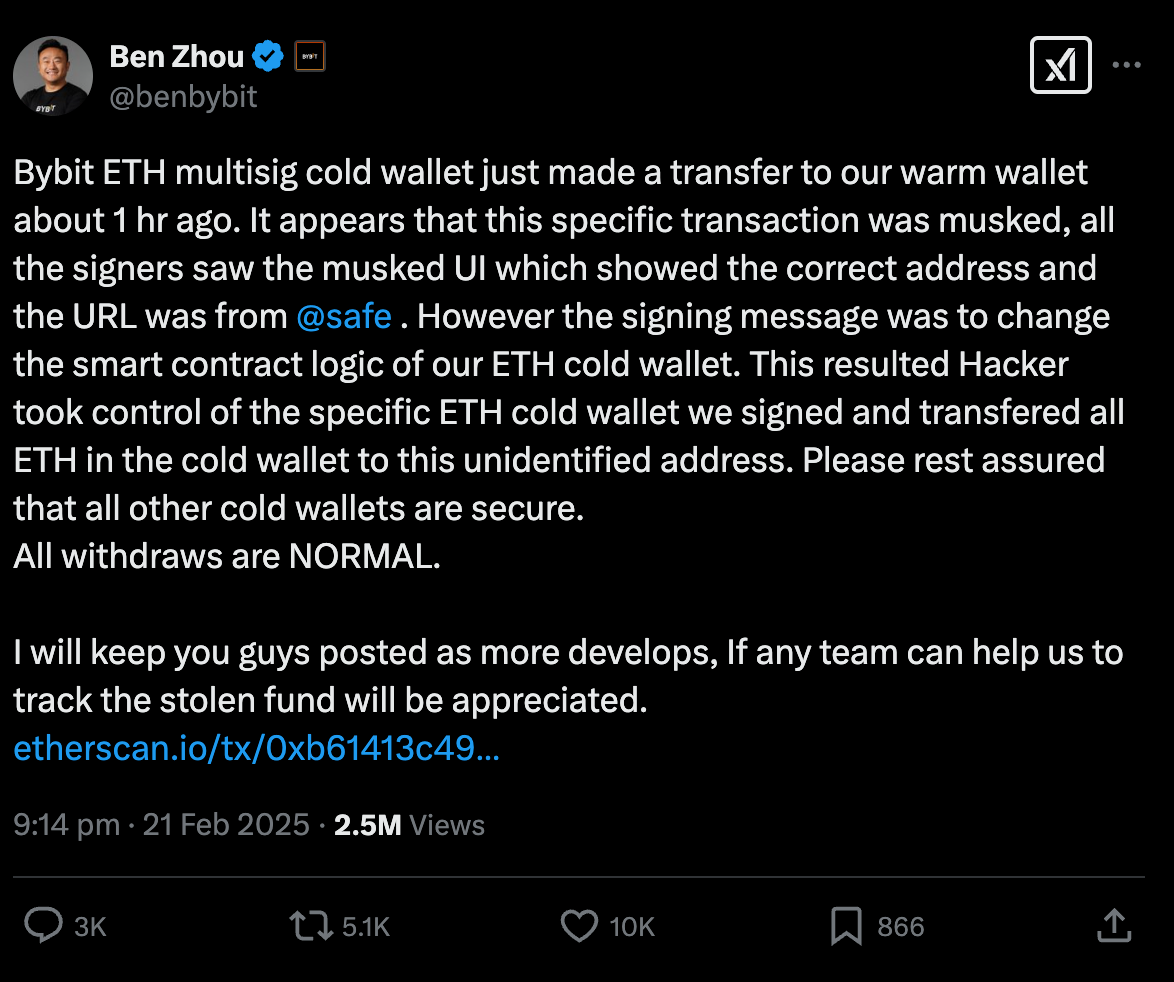
So, here’s the deal—exchanges like Bybit often shuffle funds around. Cold wallets to warm wallets, warm to hot, you know the drill—low liquidity, trading spikes, whatever. Today, Bybit likely tried moving some ETH from a cold wallet to a hot one for regular ops. Standard stuff, right? Except, it didn’t go as planned.
Ben Zhou, Bybit’s CEO, spilled the beans on X (See the Post below)
Do Users Really Need to Worry? What’s the Loss So Far?
The hack resulted in a loss of approximately $1.46 billion, with reports indicating 401,346 ETH (valued at $1.13 billion) and additional stETH swapped on decentralized exchanges (Bybit hit with $1.4 billion hack).
Bybit's total assets were around $16.3 billion, meaning the hacked amount was about 9% of their holdings (Bybit trade volume and market listings).
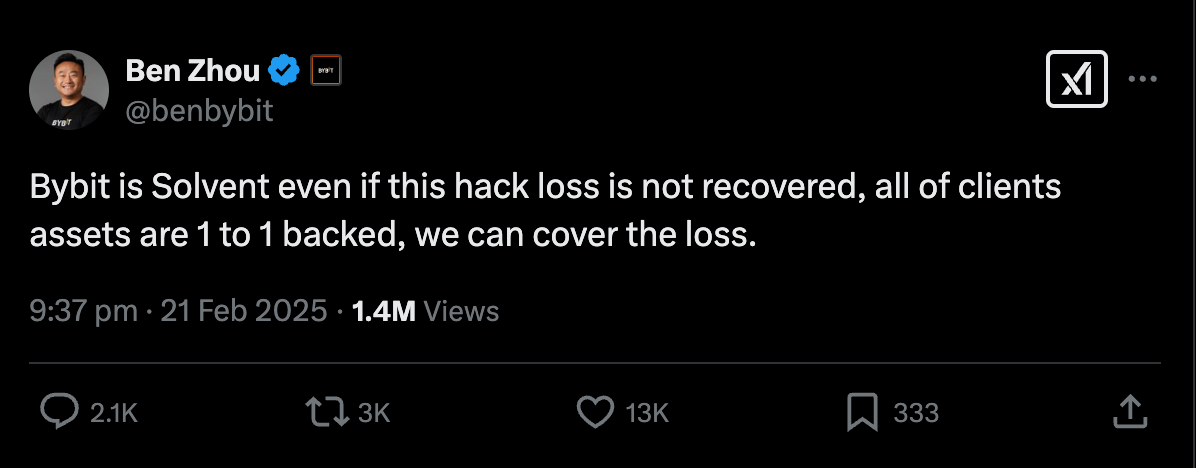
Ben Zhou chimed in again on X, saying user funds are 1:1 backed and other wallets are safe (X post by benbybit). So, panic? Nah, not yet—users are probably fine. Ben’s vouching for it, and the numbers back him up. Still, 9% stings.
How It Got Hacked Though?
Summary:
The hack likely involved a "masked" transaction, where signers saw a legitimate interface but approved a malicious one, altering the smart contract logic. This could be a sophisticated phish attack, tricking signers into approving unauthorized transfers, similar to the WazirX hack, which also involved multisig wallet vulnerabilities (X post by Mudit__Gupta). Speculatively, attackers might have exploited a flaw in the signing process or used social engineering to deceive signers.
Technical Analysis: How It Might Have Happened
Multisig wallets are dope—2-of-3 or 3-of-5 signatures needed, spreading control so no single point fails.
Secure, right? Well, not if you trick the signers.
So we're speculating that this is what might have happened:
Attackers sniffed out Bybit’s multisig wallet setup—maybe even tracked the signers’ devices.
They pulled off a slick move, spoofing the UI to look legit, like Safe.eth’s clean, trusted vibe. ( By The Way!, this is really possible -- Check this tweet of ExVul's -- link )
Picture this: signers see “Move ETH to wallet X” on their screen, all nice and normal. But the actual calldata? Screaming, “Send it all to me!”
They hit approve, and what else do you expect?.
This isn’t some wild new trick. Flashback to 2017: the Parity Wallet hack. A smart contract bug let hackers swipe millions (The Parity Wallet Hack Explained).
Bybit’s case feels different, though—less about a contract flaw, more about pure deception. If signers don’t manually decode the calldata (and let’s be real, most don’t), they’re sitting ducks, waiting to get rekt.
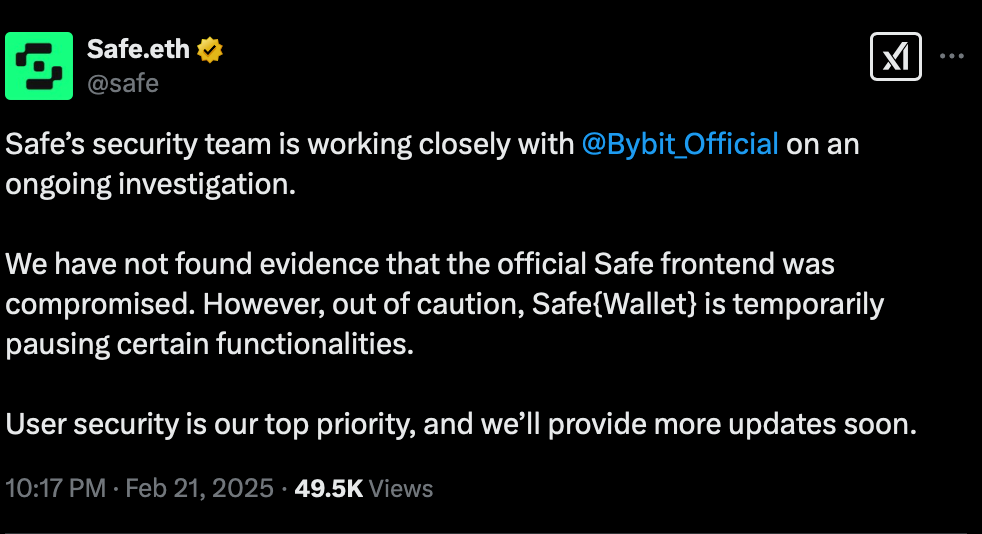
So, was Safe.eth compromised? Nah, they’re clear—no signs of a breach on their end (Security features of Safe.global multisig wallets). ~ From what they(Safe team) has said.
Major lesson here: trust but verify, or you're the next in the line of hacks.
But How Can We Protect from Hacks Like These?
Alright, let’s get practical—how do we not get rekt like this?
Transaction Verification: Signers, listen up—decode your calldata manually. That hex string? It’s your lifeblood. Hidden functions can screw you. Use Etherscan or whatever, just check it.
Expert Pcaversaccio nails it: “Verify every byte” (X post by pcaversaccio). Laziness kills.
Emergency Breaks: Smart contracts with a pause button? Yes, please. Suspicious vibes? Halt everything, figure it out. Time’s your friend here.
Pro Tip: BazziBazzani’s got a killer blog on this—trustless verification 101. Read it, live it (X post by BazziBazzani).
Again, let us say some old classic line:
Humans are the weakest link and they are so vulnerable as compared to systems.
Author: Gowtham Naidu Ponnana
Senior Security Researcher at TECHFUND